For more than four decades the Sudan People's Liberation Movement has carried the hopes of the people of South Sudan, from the first shots at Bor in 1983, through twenty-one years of war and a hard-won peace, to independence in 2011 and the work of building a nation. The SPLM Archives bring that record together in one place: a chronology of the Movement, its leaders and conventions, the founding documents and peace agreements, and the photographs that tell the story.
History chapters
Four in-depth chapters tell the central story of the Movement, each drawing on the SPLM's own documents and on the published historical record.


Before 1983: the roots of the struggle
The SPLM was born from a struggle that began long before 1983. At the Juba Conference of 1947, the colonial administration decided that the South would be joined to the North in a single Sudan, with little say for southern communities. On 18 August 1955, months before Sudan's independence, southern soldiers of the Equatoria Corps rose at Torit, and the mutiny spread to Juba, Yei and Maridi. It opened seventeen years of war waged by the Anya-nya movement.
The Addis Ababa Agreement of 1972 ended that first war and gave the South a regional government of its own. But over the following decade the agreement was steadily undermined: by the Jonglei Canal project, by disputes over the oil discovered in the South, and finally, in 1983, by the redivision of the Southern Region into three and the imposition of Sharia law across the country. For a generation of southern officers, students and politicians, the lesson was clear. Autonomy granted from Khartoum could be taken away by Khartoum. Only a new kind of struggle, for a new kind of Sudan, could secure the rights of the people.
The SPLM did not begin the struggle of the people of the South. It gave that struggle a programme, an army and a vision.
The SPLM chronology
The milestones below follow the Movement from its founding to the present day. Dates are given as recorded in SPLM documents.
1983–1985The birth of the Movement
- The revolt at Bor
Battalion 105 at Bor, commanded by Major Kerubino Kuanyin Bol, resists an order to disarm and transfer north; the garrison at Pibor follows. The date is honoured ever since as SPLM/SPLA Day.
- Ayod rises
Battalion 104 at Ayod, under Major William Nyuon Bany, joins the revolt. Soldiers and civilians make their way to bases in western Ethiopia.
- The SPLM Manifesto
The Movement issues its first Manifesto, drafted in Addis Ababa. Dr. John Garang de Mabior becomes Chairman and Commander-in-Chief, with Kerubino Kuanyin Bol and William Nyuon Bany as his deputies. The Manifesto calls for a united, democratic and secular "New Sudan".
- The "September Laws" rejected
President Nimeiri imposes Sharia law across Sudan. The SPLM rejects it as a denial of the rights of non-Muslims and of a pluralist nation.
- Bilpam
The first fully-fledged SPLA battalion graduates at Bilpam in western Ethiopia, which becomes a symbol of the uprising.
- Nimeiri falls
A popular uprising in Khartoum overthrows President Nimeiri. The SPLM calls for a national constitutional conference to address the root causes of the war.
1986–1991War and the search for a national settlement
- Koka Dam Declaration
The SPLM/SPLA and the National Alliance for National Salvation agree in Ethiopia on the conditions and agenda for a national constitutional conference, including repeal of the September Laws.
- Sudan Peace Initiative
Dr. John Garang and Mohamed Osman al-Mirghani of the Democratic Unionist Party agree in Addis Ababa on a framework for peace, including freezing the September Laws.
- The SPLA advances
Major garrisons in Equatoria and Upper Nile fall to the SPLA, and much of the southern countryside comes under SPLM administration.
- The NIF coup
A military coup backed by the National Islamic Front brings Omar al-Bashir to power and ends the peace process of the democratic period.
- Loss of the Ethiopian rear
The fall of the Mengistu government in Ethiopia costs the SPLA its main rear bases, and hundreds of thousands of refugees return to Sudan.
1991–2002Crisis, renewal and reunification
- The Nasir split
Commanders led by Dr. Riek Machar and Dr. Lam Akol announce a breakaway from the Movement's leadership. The split is followed by devastating fighting between communities, including the killing of civilians in Bor in November 1991, and by heavy losses that the Khartoum government exploits.
- The Torit Declaration
The SPLM leadership affirms that all the people of the South share one common cause, the right to self-determination, around which they must unite.
- First National Convention, Chukudum
More than five hundred delegates meet in Eastern Equatoria and reorganise the Movement, separating its political, military and civil wings (see below).
- Self-determination on the table
The IGAD Declaration of Principles (1994) and the Asmara Declaration of the National Democratic Alliance (1995) recognise the right of the people of the South to self-determination.
- Operation Thunderbolt
The SPLA takes Yei in March 1997 and much of Western and Central Equatoria, followed by Rumbek, Tonj and Yirol in Bahr el Ghazal.
- Wunlit Peace Conference
Dinka and Nuer leaders from the West Bank of the Nile meet at Wunlit, under the New Sudan Council of Churches, and sign a covenant ending years of fighting between their communities. The SPLM supports this "people-to-people" peace process.
- The Nairobi Declaration on unity
Dr. John Garang and Dr. Riek Machar sign a declaration reuniting the SPLM/SPLA and Machar's Sudan People's Defence Force, committing both to a democratic New Sudan and to the IGAD peace process.
2002–2005The road to peace
- Machakos Protocol
Signed in Kenya under IGAD mediation, the protocol recognises the right of the people of Southern Sudan to self-determination through an internationally monitored referendum after a six-year interim period. Read the chapter.
- Security arrangements
At Naivasha, the parties agree that the SPLA will remain a separate army during the interim period, with joint integrated units.
- Wealth sharing
The parties agree on sharing the country's oil and non-oil revenue between the national government and the South.
- Power sharing and the Three Areas
Protocols on power sharing, on Abyei, and on Southern Kordofan and Blue Nile complete the main body of the agreement.
- The Comprehensive Peace Agreement
Dr. John Garang and Sudan's First Vice President, Ali Osman Taha, sign the CPA in Nairobi, ending Africa's longest-running civil war. Read the chapter.
2005–2011Government, loss and independence
- Dr. Garang sworn in
Dr. John Garang is sworn in as First Vice President of Sudan and President of the Government of Southern Sudan, before a vast crowd in Khartoum.
- The death of the founder
Dr. John Garang dies when the helicopter carrying him back from Uganda crashes in the Imatong mountains. The nation remembers him on Martyrs' Day each year.
- Cde. Salva Kiir Mayardit leads
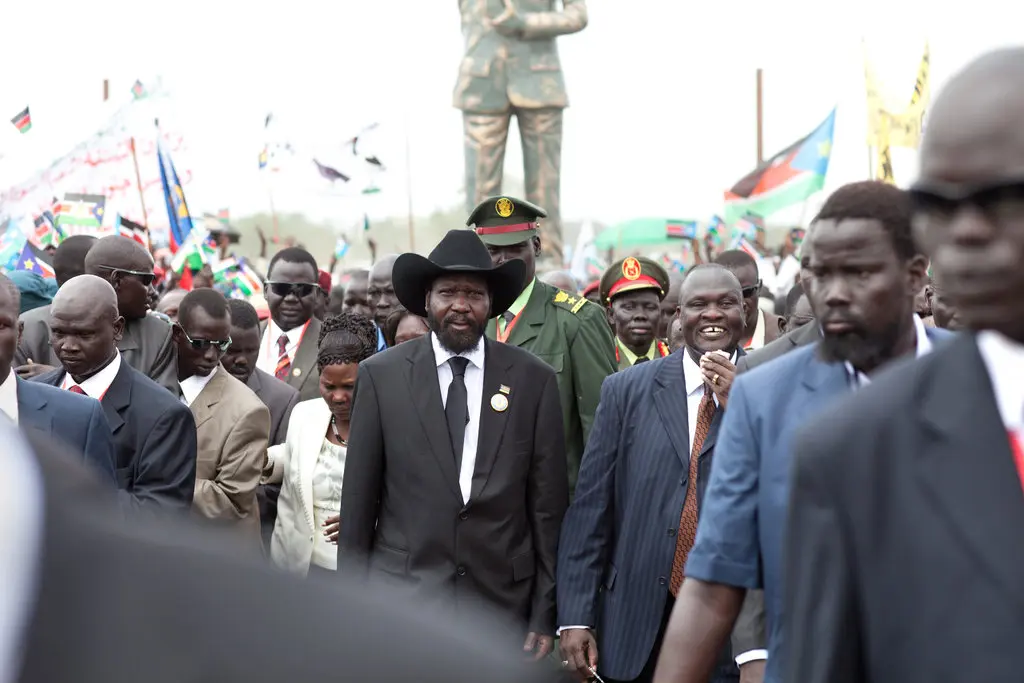
Cde. Salva Kiir Mayardit, a founding commander of the SPLA, is sworn in as First Vice President of Sudan and President of the Government of Southern Sudan, and leads the SPLM through the interim period.
- Second National Convention, Juba
The Convention elects Cde. Salva Kiir Mayardit Chairman and adopts a new SPLM Constitution and Manifesto (see below).
- General elections
In Sudan's first multi-party elections in more than two decades, Cde. Salva Kiir Mayardit is elected President of the Government of Southern Sudan with about 93 per cent of the vote.
- The referendum
The people of Southern Sudan vote on their future. 98.83 per cent choose independence.
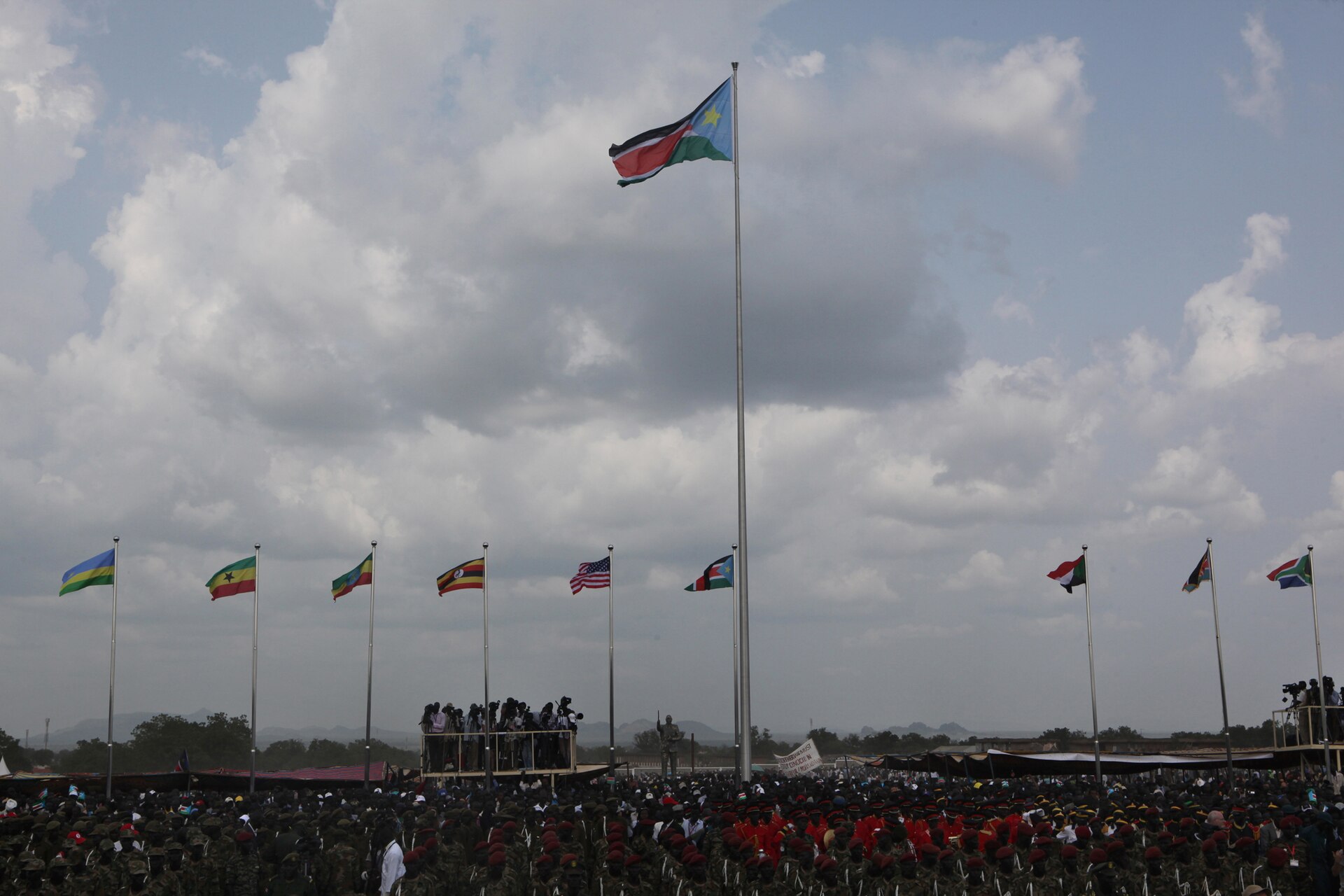
- Independence
The Republic of South Sudan is proclaimed in Juba, at the resting place of Dr. John Garang, and Cde. Salva Kiir Mayardit is sworn in as its first President. The SPLM's members in Sudan go on to organise separately as the SPLM-North. Read the chapter.
2011–2018Building a new nation and renewing unity
- Building the state
As the governing party, the SPLM leads the creation of the institutions of the new Republic, under the Transitional Constitution of 2011.
- Crisis in the leadership
A political dispute within the SPLM leadership turns into armed conflict. The SPLM-in-Opposition is formed, and a group of senior members who were detained and later released becomes known as the "former detainees".
- The Arusha Agreement
Under the mediation of Tanzania's Chama Cha Mapinduzi, the SPLM, the SPLM-in-Opposition and the former detainees sign an agreement on the reunification of the Movement.
- Peace agreement
The Agreement on the Resolution of the Conflict in the Republic of South Sudan (ARCSS) is signed under IGAD mediation.
- From SPLA to SSPDF
The national army, born as the SPLA in 1983, is renamed the South Sudan People's Defence Forces.
- The Revitalised Agreement
The Revitalised Agreement on the Resolution of the Conflict in the Republic of South Sudan (R-ARCSS) is signed in Addis Ababa.
2019–todayPeace, reorganisation and the road to elections
- Reunification pledge
The Chairman and the former detainees agree in Juba to reunite the SPLM "as a family" and set up a joint committee to implement it.
- Revitalised unity government
The Revitalised Transitional Government of National Unity is formed under the R-ARCSS.
- Elections set for December 2026
The transitional period is extended and general elections are scheduled for 22 December 2026.
- 43rd anniversary
The SPLM marks 43 years since its founding at Juba National Stadium, under the theme "SPLM Stands for a Peaceful and Prosperous South Sudan".
- Electoral roadmap endorsed
The SPLM leadership, chaired by the Chairman, welcomes the national electoral calendar and steps up organisational preparations across the country.
- splm.ss launched
The Chairman launches the SPLM website as the central digital home of the Party's historical records, founding documents and literature.
- Women League conference
The SPLM Women League concludes its First National Constitutional Conference in Juba under the theme "Empowered Woman, Empowered Nation".
- Towards the Third National Convention
The leadership adopts guidelines for party congresses and primaries as preparations intensify for the Third National Convention and the December 2026 elections.
For the latest developments, see SPLM News.
Leadership through the years
Chairmen of the SPLM
 Dr. John Garang de MabiorFounding Chairman and Commander-in-Chief, 1983–2005
 Cde. Salva Kiir MayarditChairman, 2005–present; President of the Republic of South Sudan
The founding command, 1983
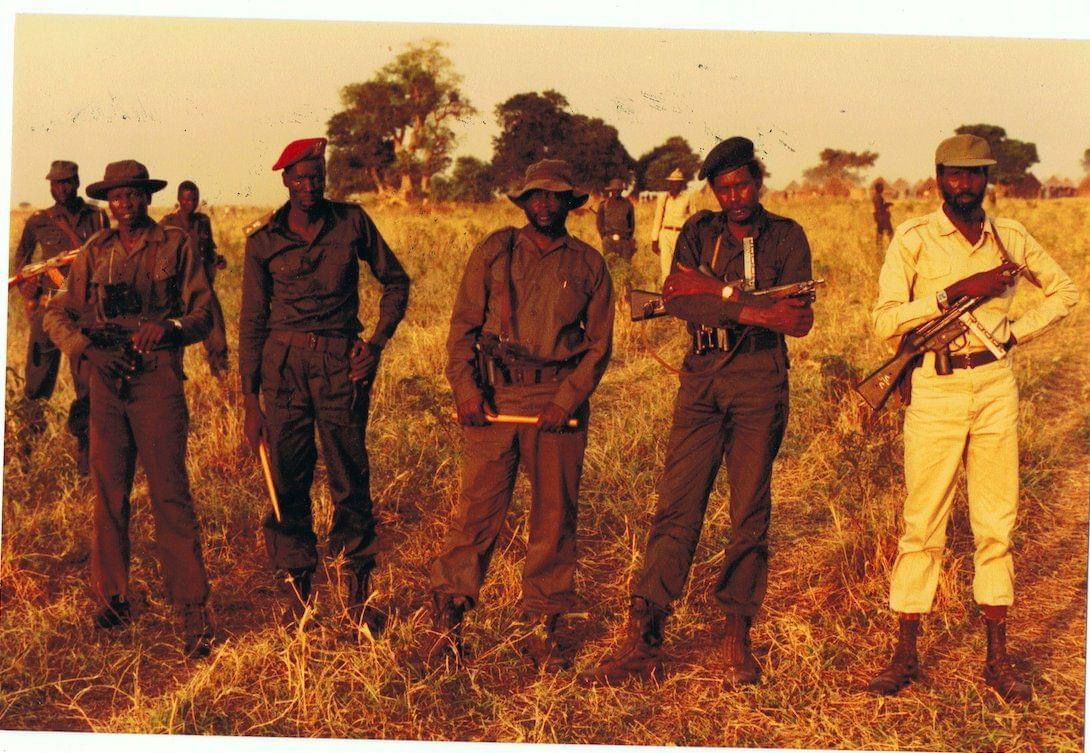
The first leadership of the SPLM/SPLA brought together officers who had led the revolts of 1983 and the earlier resistance: Dr. John Garang de Mabior (Chairman and Commander-in-Chief), Kerubino Kuanyin Bol (deputy, who led Battalion 105 at Bor), William Nyuon Bany (who led Battalion 104 at Ayod), Salva Kiir Mayardit and Arok Thon Arok. Many others, commanders, fighters, and the women and men of the civil population who fed, sheltered and carried the army, gave their lives for the cause. The Archives aim to record their names.
The 2008 leadership
After the Second National Convention, the National Liberation Council elected Dr. Riek Machar as First Deputy Chairman, James Wani Igga as Second Deputy Chairman and Malik Agar as Third Deputy Chairman, with Pagan Amum as Secretary General.
The leadership today
- Chairman: Cde. Salva Kiir Mayardit
- First Deputy Chairman: Cde. Dr. James Wani Igga
- Second Deputy Chairperson: Cde. Mary Apayi Ayiga
- Third Deputy Chairman: Cde. Simon Kun Puoch
- Secretary General: Cde. Dr. Akol Paul Kordit
- Deputy Secretaries General: Cde. Kwong Danhier and Cde. Baba Medan
See also the Political Bureau, the National Liberation Council and the National Secretariat.
National Conventions
The National Convention is the highest organ of the SPLM. It adopts the Party's Constitution and Manifesto and elects its Chairman.
Held in the liberated areas in the middle of the war, with more than five hundred delegates. It separated the SPLA (military), the SPLM (political) and the Civil Authority of New Sudan (civil administration), and created a National Liberation Council as legislature and a National Executive Council as executive.
The first convention held in Juba, during the CPA interim period. It elected Cde. Salva Kiir Mayardit as Chairman for a five-year term and adopted the SPLM Constitution and Manifesto of 2008, preparing the Movement to contest the 2010 elections as a political party.
Preparations are under way, including congresses and primaries at every level, under guidelines adopted by the leadership in September 2026.
Document library
Founding texts of the Movement and the agreements that shaped its history. Documents marked PDF are held on this website; others open in the public archives that preserve them.
- PDFSPLM ManifestoThe Party's vision, history and programme
- PDFSPLM ConstitutionThe Party's fundamental law (2008, as amended)
- PDFMachakos Protocol20 July 2002 · Right of self-determination
- PDFComprehensive Peace Agreement9 January 2005 · Full text
- ExternalKoka Dam Declaration24 March 1986 · UN Peacemaker
- ExternalWunlit Dinka–Nuer Covenant8 March 1999 · PA-X archive
- ExternalNairobi Declaration on Unity6 January 2002 · PA-X archive
- ExternalCPA at UN Peacemaker9 January 2005 · United Nations
- ExternalArusha Agreement on SPLM Reunification21 January 2015 · PA-X archive
- ExternalRevitalised Peace Agreement (R-ARCSS)12 September 2018 · PA-X archive
Read the Manifesto and Constitution online.
Photo archive




Days of remembrance
- Peace Agreement DayAnniversary of the signing of the Comprehensive Peace Agreement in 2005.
- SPLM/SPLA DayFounding of the Movement at Bor in 1983, honouring the founders, the martyrs and the wounded heroes and heroines.
- Independence DayBirth of the Republic of South Sudan in 2011.
- Martyrs' DayRemembering Dr. John Garang de Mabior and all who gave their lives for the liberation of the people.
- Anniversary of the Torit MutinyRemembering the rising of 1955, the beginning of the southern armed struggle.
About the SPLM Archives
The Archives protect two things that belong together: the documentary record of the Movement (resolutions, agreements, photographs and Party papers) and the living memory of the members, veterans, families and communities who carried the struggle forward. They are coordinated by the National Secretariat, so that collecting, cataloguing and access follow SPLM rules and sound preservation practice.
Official records
Resolutions, convention and council papers, policy statements and correspondence, with inventories so items can be found and cited.
Visual and press heritage
Photographs, press and campaign material, and audio-visual recordings, prepared for safe storage and digitisation.
Memory and witness
Recorded interviews and written accounts of veterans and members, documented with date, place and consent.
Researchers, students and the media
Researchers, students and journalists may send enquiries through the Contact page. Where the material allows, copies or supervised access to originals can be arranged under rules set by the National Secretariat. Material on this website may be quoted and reproduced for news, research and education under our Terms of Use.
Help us complete the record
Do you hold photographs, letters, documents, recordings or memories from the liberation struggle or the early years of the Movement? Veterans, families and communities hold much of the SPLM's history. Contact the National Secretariat to describe what you have and how it came to you. Staff can advise on donating, copying, or recording testimony, and originals can be copied and safely returned.